Google Ads for Doctors, Hospitals & Clinics: A Beginner’s Guide to Healthcare Advertising
When people need a doctor, hospital, diagnostic service, or specialist, Google is often one of the first places they search. For healthcare businesses, Google Ads for doctors, hospitals, and clinics can provide an opportunity to reach people who are actively looking for relevant healthcare services.
However, healthcare advertising requires a careful approach. Advertisements should be accurate, trustworthy, and compliant with applicable advertising policies and healthcare regulations. The goal should be to connect people with appropriate healthcare information and services—not to make unrealistic promises. healthcare advertising
What Are Google Ads for Healthcare?
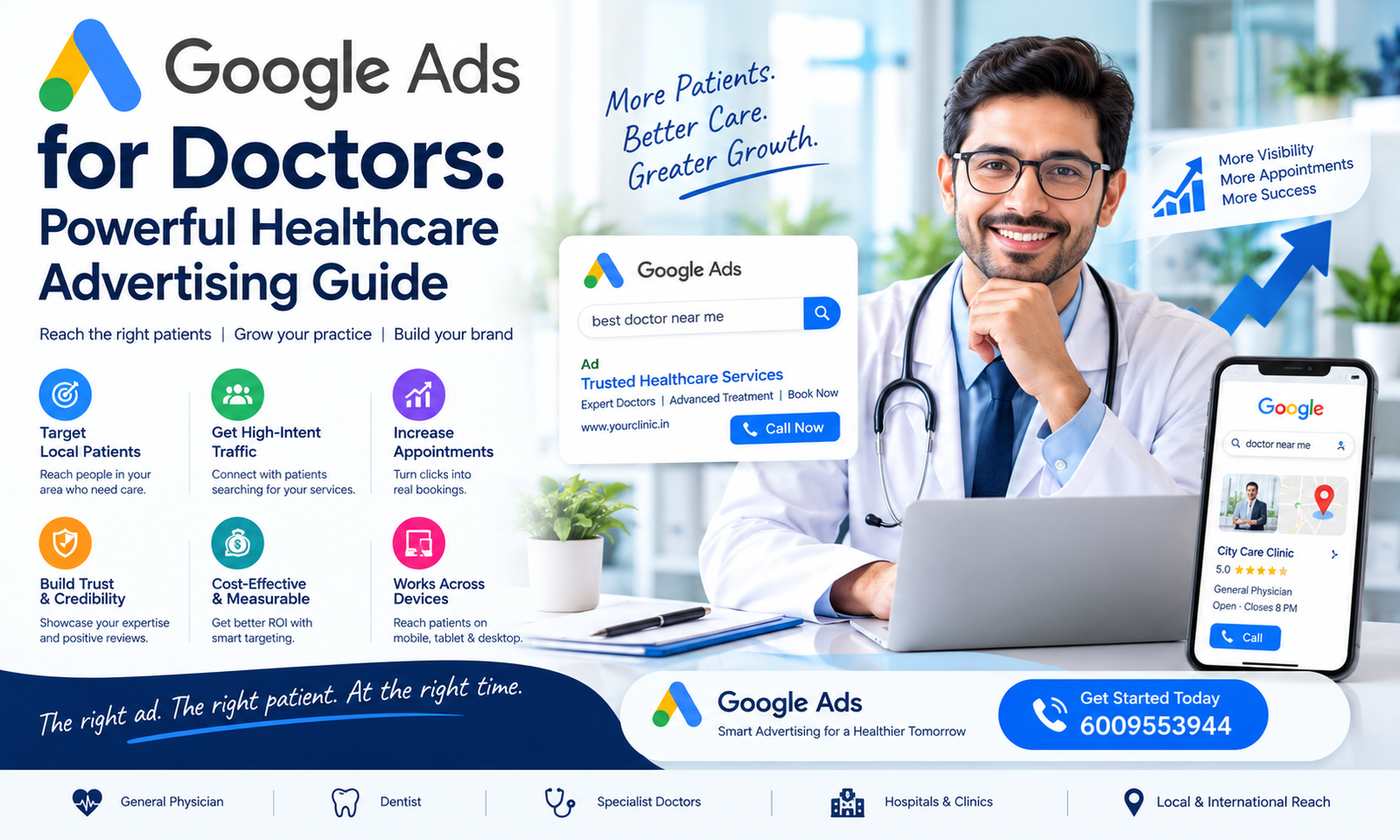
Google Ads allows businesses to display advertisements when users search for relevant terms. For example, a clinic may want to appear when someone searches for services such as “dentist near me,” “skin specialist,” or “eye clinic in [city].”
Unlike traditional advertising, search advertising can reach users when they already have an interest in a particular service. This makes Google Ads a potentially useful channel for clinics and healthcare organizations seeking qualified enquiries.
Why Should Doctors and Clinics Consider Google Ads?
One major benefit is targeted visibility. A healthcare provider can focus campaigns on relevant services and geographic areas.
For example, a local clinic may target searches from people within its service area rather than advertising across an entire state or country. Google Ads for doctors
Google Ads can also provide measurable information such as impressions, clicks, enquiries, and campaign costs. This data can help marketers understand which campaigns and keywords are generating interest. healthcare advertising
Choose the Right Keywords
Keyword selection is an important part of a successful healthcare advertising campaign.
Consider keywords related to:
- Medical services
- Specialist consultations
- Clinic locations
- Diagnostic services
- Appointment-related searches
- Specific healthcare treatments
Location-based keywords can be particularly valuable for clinics that primarily serve local patients.
However, marketers should avoid using keywords or advertising messages that make unsupported medical claims.
Create Trustworthy Ad Copy
Healthcare advertisements should be clear and professional. Your ad should communicate what the clinic offers without exaggerating results.
For example, instead of making a guaranteed claim about a treatment, focus on factual information such as the available service, location, consultation options, or appointment process.
A strong advertisement can include a clear call-to-action such as Book an Appointment, Contact Us, or Learn More, depending on the service and applicable policies.
Build a High-Quality Landing Page
Getting a click is only the beginning. Your website or landing page should make it easy for visitors to find the information they need.
A healthcare landing page should ideally include:
- Doctor or clinic information
- Services offered
- Qualifications and credentials where appropriate
- Location and contact details
- Appointment information
- Frequently asked questions
- Clear navigation
- Mobile-friendly design
The information should be accurate, easy to understand, and regularly updated.
Use Location Targeting
Local targeting is especially important for hospitals, clinics, dentists, diagnostic centers, and individual practitioners.
A clinic in Imphal, for example, may want to prioritize people searching for healthcare services within its relevant service area rather than spending its entire budget on users who cannot realistically visit the clinic.
Location targeting can help make advertising budgets more efficient.
Track Conversions and Results
Google Ads provides reporting tools that can help advertisers understand campaign performance.
Depending on the healthcare business, conversions could include:
- Appointment requests
- Phone calls
- Contact-form submissions
- Website enquiries
- Directions or other permitted actions
Tracking these actions helps determine whether advertising is generating meaningful business outcomes rather than simply producing website traffic.
Healthcare Advertising Requires Extra Care
Healthcare is a sensitive advertising category. Advertisers should review Google’s current advertising policies as well as applicable medical advertising, privacy, and professional regulations in their jurisdiction. Google Ads for doctors
Avoid misleading claims, guaranteed outcomes, sensational language, or advertising practices that could compromise patient trust.
A good healthcare advertising strategy combines Google Ads, SEO, local SEO, content marketing, and a professional website. Paid advertising can generate visibility quickly, while SEO and useful content can support long-term organic growth.
Conclusion
Google Ads for doctors, hospitals, and clinics can be a powerful way to reach people searching for healthcare services. The strongest campaigns focus on relevant keywords, accurate advertising, local targeting, useful landing pages, conversion tracking, and patient trust.
For healthcare businesses, success should not be measured only by clicks. The real objective is to create a trustworthy online experience that helps people find accurate information and connect with an appropriate healthcare provider.
Table of Contents